FREE SHIPPING ON ORDERS OVER $100! (Only available to US customers)

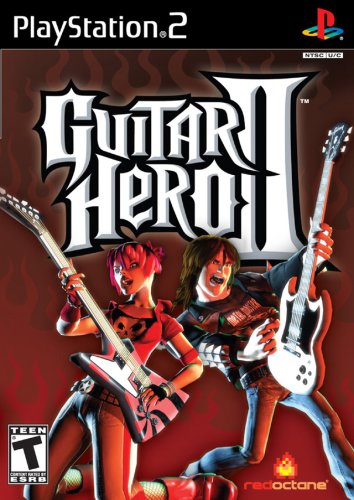
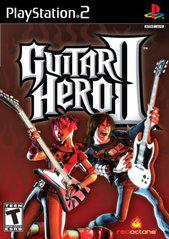
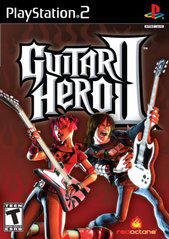
Guitar Hero II - (CIB) (Playstation 2)

$699 $899
Taxes, discounts and shipping calculated at checkout.

Naming and Condition Key

NEW: Sealed Product. Still in Shrink-wrap.
CIB: Normal Condition. Has some packaging or manuals and is generally complete
LS: Loose item only, no box or case.
Missing: Missing Manual or other inserts, but includes game and box
Flaw: Cosmetic wear, but tested, working, and covered by our 90 day working guarantee
Miss/Flaw: Flawed Box without Manual
P/O Book: A strategy guide or book with some amount of wear consistent with use. May or may not include posters or bonuses

For TCG:

Near Mint (NM): Minimal wear from shuffling, play, or handling and can have a nearly unmarked surface, crisp corners, and unblemished edges outside of a few slight flaws. A Near Mint card may have slight edge wear or a couple minor scratches, but overall look nearly unplayed with no major defects. 
Lightly Played (LP): Cards in Lightly Played condition may have minor edge wear, scuffs, or scratches. There are no significant imperfections or issues with the structural integrity of the card. Noticeable imperfections are okay, but none should be too severe or at too high a volume.

Moderately Played (MP): Cards in Moderately Played condition can have edge wear, surface wear, scratching or scuffing, bends with creases, or a combination of moderate examples of these imperfections. Do not impact the structural integrity of the card.
Heavily Played (HP): Cards in Heavily Played condition show a major amount of wear. Creasing, whitening and other faults. Heavily Played cards can also have defects or severe imperfections that do not impact the integrity of the card.
Damaged (DM): Damaged cards show wear or imperfections beyond the standards for other conditions. Major border wear, scratching or scuffing, as well as bends, tears, splitting, foreign substances such as food or liquid, or other damage that impacts the integrity of the card. t here


Guitar Hero II, the follow-up to the PS2-only game Guitar Hero, expands upon the gameplay and features of the original game. As a wannabe rockstar, you need to play songs by pressing combinations of five fret buttons on a guitar-shaped controller, while working the strum bar, along with an optional whammy bar for distortion. The sequel contains 64 songs, of which 40 have been licensed. One of the tracks was discovered through a contest at beaguitarhero.com, where unlicensed bands could send in a demo to be included in the game. Most of the tracks have been covered in-studio, but a few use original recordings.*The career mode has been revamped as a high school battle where you need to make your way to the top. Every venue is now represented by a different city. There are also encore performances, and unlockables can still be bought in the shop. A completely new addition is the practice mode (Shred School). When you keep getting stumped by a single track, you can train in this mode. The background music is dropped, you can choose a certain section to practice, and there four types of speeds available, to slowly get the hang of difficult passages.*In the multiplayer mode, you can still play the traditional mode from the first game, where sections are traded off between players. The co-op mode is new: both players play the same song at the same time, but one is given the lead guitar, while the other handles the bass or rhythm guitar. Unlike the traditional mode, you can fail and both player share the score, rock meter and multiplier. To activate star power (a short power-up mode where the score multiplier is doubled, built up in a meter by playing a number of star-shaped notes without flaws and best saved for difficult sections) both players need to raise the guitar at the same time. You cannot practice together in this mode, but the different sections are available in the singleplayer practice mode. The final mode is called Face-Off. Here, both players play every single note at the same time. In the multiplayer mode, each player can now choose an individual difficulty level. Upon completing Face-Off, Pro Face-Off becomes available, where both players need to use the same difficulty level.Other additions are the introduction of three-button chords, the use of hammer-ons and pull-offs (holding one note while playing another and vice versa) is smoother, and the screen now shakes if you break a note streak (only of the side of the player who makes the mistake in the multiplayer mode).